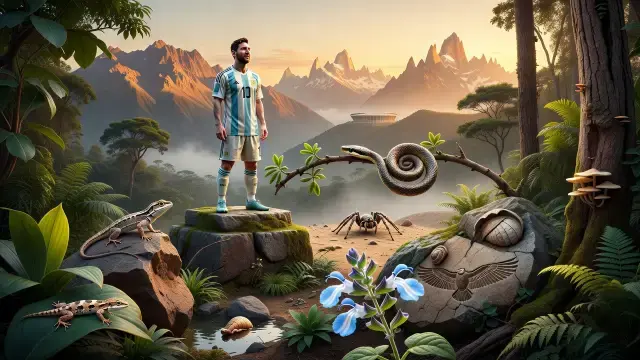
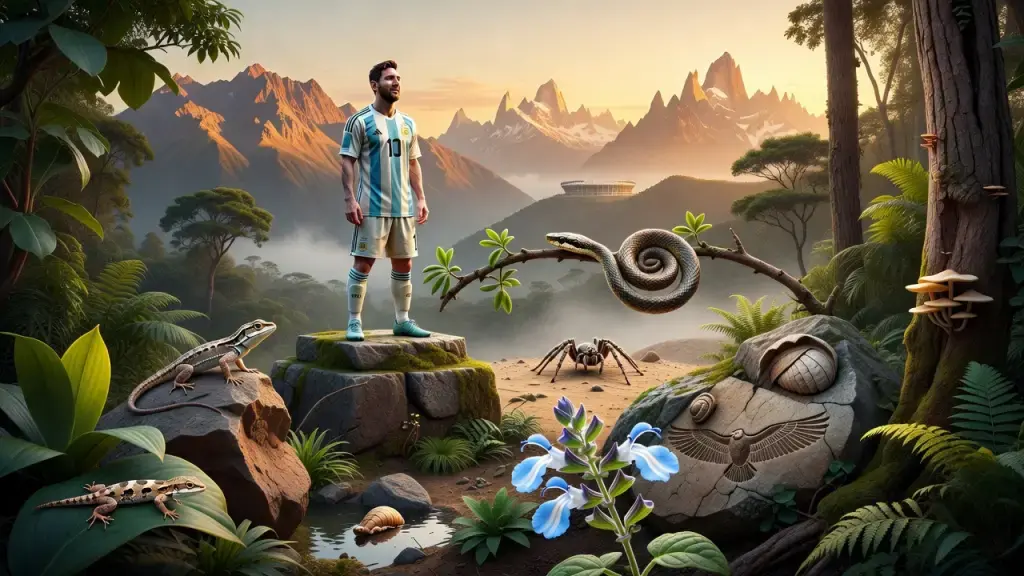
Lionel Messi's list of honours keeps growing in the unlikeliest of fields. The Argentine superstar, already a world champion and the most decorated player in football history, now has six different species named after him by scientists across South America, extending a Guinness World Record he already held.
From the Pitch to the Natural World
Until recently, Messi held the record for the most species formally named after a footballer, with five creatures and fossils carrying his name. That list included a lizard from Argentina, a burrowing spider from Patagonia, a fossil brachiopod and a fossil condor species, plus a type of fungus discovered in the Andean cloud forest and formally described in 2024. Researchers behind several of these discoveries said the choice was deliberate: attaching Messi's name to a species helps draw global attention to regions and ecosystems that might otherwise go unnoticed.
That strategy was clear in 2023, when scientists in Ecuador identified a new, non-venomous snake species living in the country's cloud forests and named it Synophis messii. The researchers hoped the association with one of the world's most recognisable athletes would spotlight the need to protect the area's biodiversity. The same year, a newly discovered burrowing spider found in Argentina's sandy landscapes was named Acanthogonatus messii, adding to the tally recognised by Guinness World Records.
A Sixth Honour, This Time a Flower
Messi's record has now been extended further with the naming of Salvia messii, a newly discovered plant species found in Peru. According to those involved in its classification, the plant's light blue and white colouring inspired the tribute, linking its appearance to the colours most associated with the Argentine national team. It is a fitting, if unconventional, nod to a player whose influence extends well beyond the football pitch.
Maradona's Parallel Legacy
Messi is not the only Argentine icon to be honoured this way. Diego Maradona, whose legend remains central to Argentine football culture, has also had species named in his memory. Bogasonia maradoniana, a deep-sea snail identified by Argentine researchers, was named as a tribute to the national pride he generated, particularly following Argentina's 1986 World Cup triumph. Separately, scientists named a parasitic flatworm found in freshwater fish Diegoglossidium maradonai, creating both a new genus and species in his honour. The researchers were careful to stress that naming a parasite after someone carries no negative connotation in biology - it is simply another way of recognising lasting cultural impact.
Why It Resonates Beyond Football
These tributes highlight something broader than sport: the way Messi and Maradona have become reference points not just for football fans, but for scientific communities seeking to connect public recognition with conservation and discovery. For a player still competing at the top level and continuing to shape football's global narrative, this unusual scientific legacy adds another layer to a story already defined by records on the pitch.