Novak Djokovic has delivered a pointed message to the tennis world following his semifinal defeat at the 2026 Wimbledon Championships, insisting that the relentless focus on a potential 25th Grand Slam title has gone beyond motivation and crossed into something he finds genuinely irritating. The Serb fell to world No. 1 Jannik Sinner in straight sets - 6-4, 6-4, 6-4 - bringing his latest bid for a record-extending Major to an end on the sport's most storied grass courts. At 39, Djokovic remains one of the most formidable competitors in the draw, but Sunday's defeat laid bare the growing distance between him and the very best of the current generation.
The loss followed a gruelling quarterfinal in which Djokovic came through five demanding sets against No. 3 seed Felix Auger-Aliassime, a display that underscored he still possesses the physical and mental reserves to compete at the highest level. In a summer already packed with compelling sporting narratives - from the 27 opener in English football to the churning drama of the tennis Grand Slam calendar - Djokovic's semifinal exit and subsequent press conference remarks have cut through as one of the more candid moments of the season. Speaking in Serbian to reporters, the 24-time Major champion was unequivocal: chasing a 25th title is not what gets him out of bed in the morning, and the persistent narrative suggesting otherwise has begun to wear on him.
Djokovic Confronts the Weight of Expectation
Djokovic chose his words carefully but with unmistakable force. "Not the ultimate goal. It's very important for you to know - a lot of people burden me, and people who are in my, let's say, second circle of closeness, and the media. I understand that people really want me to win that 25, and I want to, but that's not the ultimate goal," he said. The distinction matters. There is a difference between a player who wants to win another title because winning is in his DNA, and one who defines his entire continuing career by a single numerical threshold. Djokovic was arguing firmly for the former.
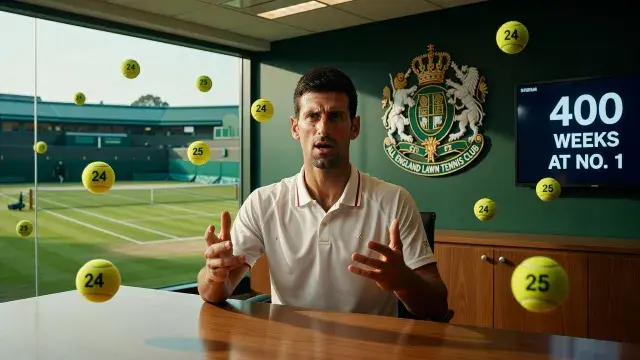
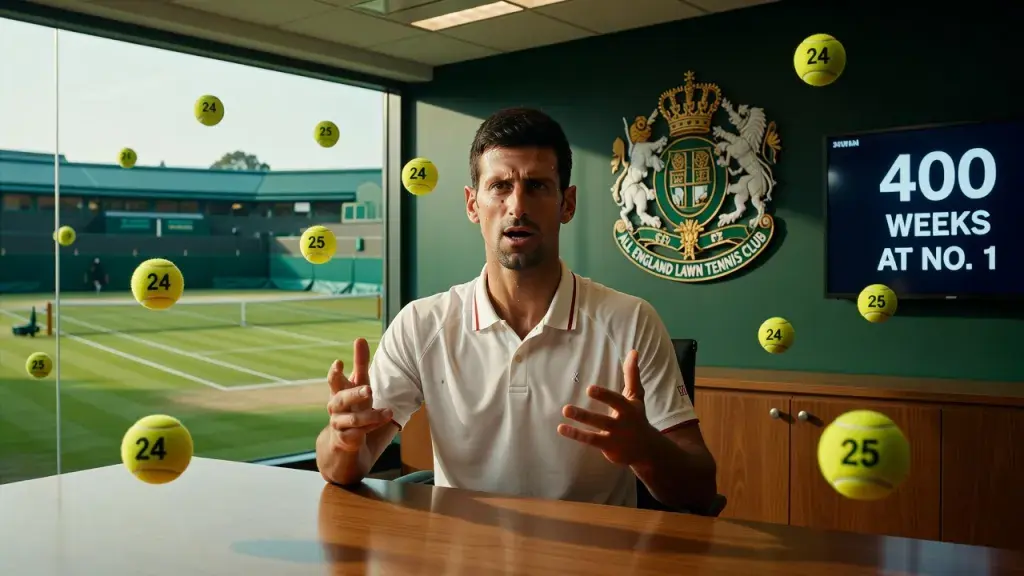
He went further, drawing a line in the sand against what he perceives as an expanding goalpost of achievement that can never fully satisfy. "Let's put things into perspective, folks. It really started to annoy me a little because, somehow, it's like I'm not enough for myself, and then others put extra weight on me," he said. "As if 24 is not enough but 25 is enough, 100 tournaments is not enough but 110 is enough, 400 weeks as number one is not enough but 1000 weeks is enough." The argument is philosophically coherent and, frankly, hard to dismiss. Djokovic's career statistics - regardless of what comes next - already sit in a category of their own. No player in the Open Era has accumulated more Grand Slam titles. He has spent more weeks at world No. 1 than any other man in the history of the rankings. To frame all of that as a prelude to something still missing is, as he suggested, a curious way to honour exceptionalism.
A Career Legacy That Needs No Asterisk
The emotional core of Djokovic's press conference remarks came when he posed a question that few in the room seemed prepared for: what if the 25th never arrives? "I'm really sick of talking about when 25 will be… and what if it never comes? And now what? Is it then a failed career?" he said. The question was rhetorical, but it carried genuine weight. The honest answer, of course, is no - 24 Grand Slam titles, achieved across multiple decades and against multiple generations of opponents, constitutes one of sport's most complete careers by any reasonable measure. But Djokovic's frustration speaks to a broader tendency in elite sport coverage to reduce sustained excellence to a single pending milestone, rendering everything before it somehow conditional.
What makes the moment particularly interesting is that Djokovic is not walking away. He is set to return to competitive action during the North American hardcourt swing, meaning the conversation he is so weary of will inevitably resume. But his remarks serve as a meaningful recalibration - a reminder that the athlete's own sense of purpose does not have to mirror the narrative constructed around him by outside voices, however well-intentioned.
Sinner Closes In on Back-to-Back Wimbledon Title
While Djokovic resets, Jannik Sinner moves forward with the momentum of a player who looks increasingly at home carrying the weight of Grand Slam favouritism. The Italian's 6-4, 6-4, 6-4 victory was composed and controlled - precisely the kind of performance that defending champions produce when the occasion demands clarity over flair. Sinner will face No. 2 seed Alexander Zverev in the Wimbledon final, bringing a commanding 10-4 head-to-head advantage into the match. Should he prevail, the 23-year-old would cement his status as the defining men's player of this stretch of the decade - and do so on the sport's grandest stage for the second successive year.
Zverev, for his part, arrives in a Wimbledon final for a significant reason: his grass-court game has matured considerably, and his serve and baseline power make him a genuine threat on any surface. But Sinner's record and recent form give him a clear edge entering the contest. The final promises to be a compelling chapter in a men's game that is unmistakably in transition - one in which Djokovic remains present and dangerous, but where the trophies are increasingly finding new hands.